5 Mistakes That Make Puppy Biting Worse (And What to Do Instead)
5 Mistakes That Make Puppy Biting Worse (And What to Do Instead)
You're doing everything you think you're supposed to do. You've watched the videos, read the articles, maybe even bought a book. But your puppy is still biting — and honestly, it seems like it might be getting worse.
If that sounds like your situation, you're not failing. There's a good chance you've simply picked up some common advice that sounds logical but actually backfires. And you're far from alone — these mistakes are so widespread that professional trainers see them in the majority of new puppy consultations.
The good news is that once you identify and correct these mistakes, progress tends to come quickly. Let's walk through the five most common errors and, more importantly, what to do instead.
Mistake #1: Yelling, Scolding, or Using Physical Punishment
This is the big one, and it's rooted in an understandable human instinct. Your puppy bites you, it hurts, and your immediate reaction is to say "NO!" loudly, push the puppy away, grab their muzzle, or even tap them on the nose.
Why It Seems Like It Should Work
It feels intuitive. If the puppy experiences something unpleasant when they bite, they should stop biting, right? That's basic cause and effect.
Why It Actually Makes Things Worse
The reality is more complicated, and the science is clear on this point.
Punishment increases fear and anxiety. A puppy who is punished for biting learns to associate your hands — and sometimes you as a person — with something scary. Fear doesn't reduce biting. It changes the type of biting. Instead of playful mouthing that you can shape through training, you may end up with a puppy who bites defensively because they're afraid of what's coming.
Big reactions are exciting. To many puppies, a loud "NO!" is not a deterrent — it's a stimulus. You just got loud, animated, and engaged. For an attention-seeking puppy, that's a reward, not a punishment. The puppy learns: biting gets a big, exciting response.
Physical corrections damage trust. Grabbing your puppy's muzzle, pinning them down, or tapping their nose teaches them that your hands are unpredictable and sometimes frightening. This erodes the trust that is the foundation of all effective training. A puppy who doesn't trust their owner's hands is a puppy who is more likely to bite, not less.
Punishment suppresses warning signals. One of the most dangerous outcomes of punishment-based responses to biting is that the puppy may stop giving warning signals (growling, air snapping) before biting. They learn that warnings lead to punishment, so they skip straight to the bite. This makes future bites less predictable and potentially more dangerous.
What to Do Instead
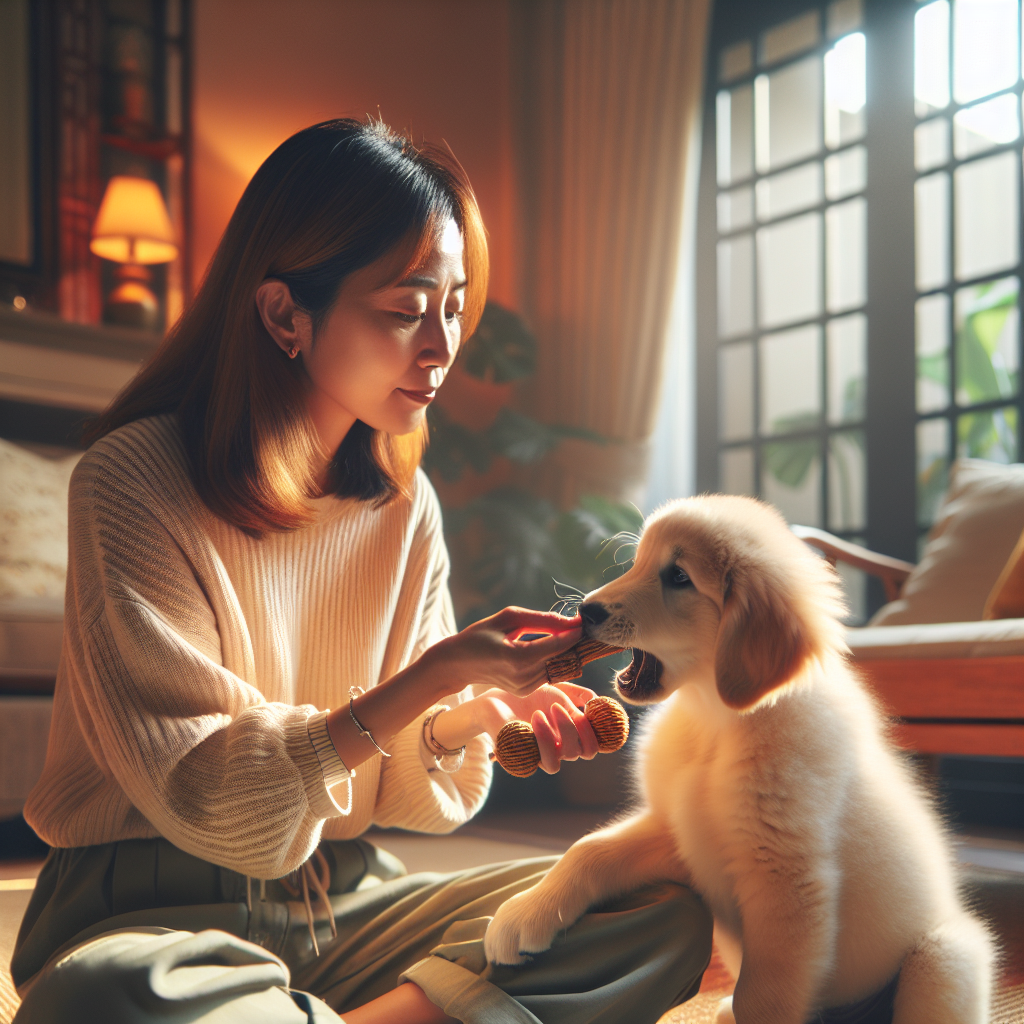
Use the "ouch and withdraw" method. When your puppy bites hard, say "ouch" briefly in a high-pitched tone and immediately stop interacting. Turn away, cross your arms, and avoid eye contact for 10 to 15 seconds. If the puppy persists, calmly leave the room for 15 to 30 seconds.
This works because it speaks your puppy's language. In a litter, when a puppy bites too hard, the other puppy yelps and stops playing. You're replicating that natural feedback loop.
Stay calm. Your emotional state matters. A calm, boring response to biting is far more effective than a dramatic one. The message you want to send is: "Biting makes all the fun stop." Not: "Biting makes my person act crazy."
Mistake #2: Being Inconsistent
Consistency might be the most underrated factor in puppy training. And inconsistency might be the most common reason training doesn't work.
What Inconsistency Looks Like
- One family member uses the "ouch and withdraw" technique while another person lets the puppy chew on their hands.
- You redirect your puppy to a toy when you're feeling patient, but when you're tired or stressed, you just push the puppy away.
- The kids play rough with the puppy (encouraging biting) during the day, and then you try to train bite inhibition in the evening.
- Sometimes you respond to biting and sometimes you don't, depending on how hard the bite is or how busy you are.
Why It Makes Things Worse
From your puppy's perspective, inconsistency is confusing. They're trying to learn the rules of a game, and the rules keep changing.
When biting sometimes works (gets attention, starts a game, gets a reaction) and sometimes doesn't, your puppy is on what behaviorists call a "variable reinforcement schedule." And here's the problem: variable reinforcement makes behaviors stronger, not weaker. It's the same principle that makes slot machines addictive — the unpredictable payoff keeps you pulling the lever.
Every time your puppy bites and gets a payoff (attention, engagement, play), it reinforces the behavior and makes it harder to extinguish.
What to Do Instead
Hold a family meeting. Before you start any training plan, sit down with everyone in the household and agree on a single approach. Write it down if that helps. The rules should be clear and simple:
- When the puppy bites hard, we say "ouch" and stop interacting for 10 to 15 seconds.
- We always redirect to a toy.
- We never roughhouse with our hands.
- We reward calm, gentle behavior with praise and treats.
Post reminders. Put a simple cheat sheet on the fridge. Not because anyone is forgetful, but because it keeps the approach visible and top-of-mind.
Be honest about slip-ups. Everyone will occasionally slip — it's human nature. The goal isn't perfection. It's enough consistency that your puppy gets a clear, reliable message the majority of the time.
Mistake #3: Using the Wrong Toys (or No Toys)
"I gave my puppy a toy, but they still prefer my hands." This is one of the most common complaints I hear, and it almost always comes down to how the toy is being presented.
Common Toy Mistakes
Handing your puppy a motionless toy while your hands are moving and animated. Your puppy is a predator by nature. They're attracted to movement. If your hands are wiggling and the toy is sitting still, your hands win every time.
Only having one or two toys available. Puppies get bored. A toy that was exciting on Monday might be completely uninteresting by Wednesday. Without variety, your puppy will look for novelty — and your shoes, pillows, and fingers provide plenty.
Using toys that are too hard, too big, or too boring for your puppy's age and size. A toy that a puppy can't easily grab, chew, or carry isn't going to compete with the instantly available alternative: your skin.
Not having toys accessible in every room. If you have to go find a toy every time your puppy bites, you've lost the redirection window. By the time you come back with the toy, the moment has passed.
What to Do Instead
Make the toy the exciting thing. When you redirect your puppy to a toy, bring it to life. Drag it on the floor like prey. Wiggle it. Play a gentle game of tug. Make the toy more interesting than your hand by a wide margin.
Rotate toys regularly. Keep 3 to 4 toys available at a time, and swap them out every few days. When an "old" toy reappears, it feels new again.
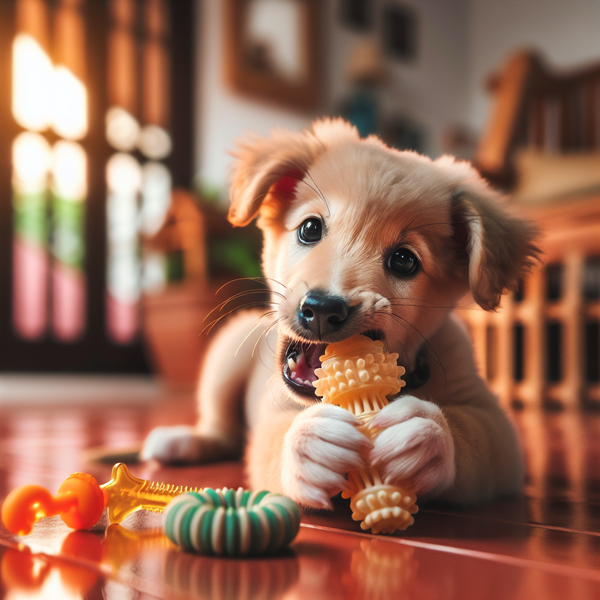
Match toys to your puppy's current needs. During teething, frozen toys and soft rubber are ideal. For high-energy play biting, rope toys and tug toys channel the energy. For calm chewing, stuffed Kongs and puzzle toys keep mouths busy.
Station toys everywhere. Keep a toy basket in the living room, bedroom, kitchen — anywhere you spend time with your puppy. The toy should be within arm's reach at all times so you can redirect immediately.
Mistake #4: Not Providing Enough Exercise and Mental Stimulation
A bored puppy is a bitey puppy. A puppy with unspent energy is a bitey puppy. And a puppy whose brain isn't being challenged will find ways to create their own stimulation — usually involving their teeth and your belongings.
The Under-Stimulated Puppy
Many new puppy owners underestimate how much physical exercise and, critically, mental stimulation their puppy needs. A quick walk around the block isn't enough for most breeds. And physical exercise alone — without mental engagement — can actually create a fitter puppy who needs even more activity.
Signs Your Puppy May Be Under-Stimulated
- Biting and mouthing increase in the hours when the puppy has had the least activity
- Destructive chewing of furniture, shoes, and household items
- Excessive barking or whining
- Inability to settle even after adequate sleep
- "Zoomies" that happen frequently and seem uncontrollable
What to Do Instead
Balance physical exercise with mental enrichment. For every session of physical activity, aim for an equivalent session of mental work. Mental stimulation tires puppies out more effectively than physical exercise alone.
Mental enrichment ideas:
- Puzzle feeders and snuffle mats. Instead of feeding from a bowl, scatter kibble in a snuffle mat or use a puzzle feeder. This engages your puppy's foraging instincts and keeps their brain busy.
- Training sessions. Short (3 to 5 minute) positive reinforcement training sessions are excellent mental exercise. Teaching new skills, practicing known ones, and playing training games all tire the brain.
- Nose work. Hide treats around a room and let your puppy search for them. Start easy and gradually increase difficulty. Scent work is deeply satisfying for dogs and is incredibly tiring.
- Frozen Kongs and lick mats. These provide sustained mental engagement and are perfect for winding down after active play.
Physical exercise appropriate for puppies:
- Short walks (a general guideline is 5 minutes per month of age, twice daily)
- Supervised play with other vaccinated, puppy-friendly dogs
- Gentle fetch or chase games
- Supervised exploration of new environments
Important: Don't over-exercise your puppy. Puppy joints and growth plates are still developing. Avoid long runs, repetitive jumping, or extended high-impact activities until your puppy is fully grown (12 to 18 months depending on breed). When in doubt, consult your vet.
Mistake #5: Ignoring the Context of the Bite
Not all biting means the same thing. And responding to every bite the same way — without considering why the puppy is biting — can mean you're treating the symptom while missing the cause.
The Contexts That Change Everything
Overtired biting is not the same as play biting. An overtired puppy who is biting frantically doesn't need redirection training — they need a nap. No amount of toy-switching will help a puppy who is past their exhaustion threshold. The solution is an enforced rest in their crate or pen.
Fear biting is not the same as attention-seeking biting. A puppy who bites when cornered, handled roughly, or confronted with something scary needs a completely different approach than a puppy who bites to start a game. Fear biting requires careful counter-conditioning and often professional guidance — not the standard "ouch and withdraw" technique.
Teething biting is not the same as habitual mouthing. A teething puppy needs pain relief and appropriate chewing outlets. A puppy who mouths habitually (but isn't teething) needs consistent bite inhibition training. The responses overlap, but the emphasis is different.
Resource guarding bites are a distinct category. A puppy who bites when you approach their food, toy, or resting spot is communicating something specific: "I feel threatened about losing this thing." This requires a structured protocol — typically involving counter-conditioning and desensitization — and often benefits from professional guidance early on.
What to Do Instead
Pause and assess before responding. Take a half-second to read the situation:
- What was happening right before the bite?
- What is my puppy's body language — loose and playful, or stiff and tense?
- How long has my puppy been awake?
- Is this the same type of biting I usually see, or does something feel different?
Match your response to the cause:
- Play biting: "Ouch" and redirect to a toy.
- Overtired biting: Enforced nap.
- Teething biting: Frozen chew toy and empathy.
- Attention-seeking biting: Complete withdrawal of attention.
- Fear biting: Remove the scary stimulus, create safety, consider professional help.
- Resource guarding: Do not punish. Consult a certified trainer.
This contextual approach is more effective than a one-size-fits-all response because it addresses the root cause, not just the behavior on the surface.
Bringing It All Together
If you recognize yourself in any of these mistakes, please don't feel guilty. Every single one of them is incredibly common, and most of them come from outdated advice that's still widely circulated. The fact that you're reading this and looking for better approaches puts you ahead of the curve.
Here's a summary of what to stop and what to start:
| Stop | Start |
|---|---|
| Yelling or physical punishment | Calm "ouch and withdraw" method |
| Inconsistent responses | Household-wide agreement on approach |
| Handing over boring, motionless toys | Making toys exciting and rotating them |
| Relying on physical exercise alone | Balancing physical and mental stimulation |
| Treating all biting the same | Reading context and matching your response |
Make these five shifts, and you'll likely see a meaningful change in your puppy's biting within days — not weeks.
Want a printable cheat sheet with these fixes? Download our free PDF guide, 5 Quick Fixes for Puppy Biting, and keep it handy for those moments when you need a quick reminder of what to do (and what not to do). Download the Free Guide →