The 7-Day Puppy Biting Solution That Actually Works
The 7-Day Puppy Biting Solution That Actually Works
Let's be honest with each other right up front: there is no magic trick that will stop puppy biting overnight. Anyone who promises you that is either selling snake oil or has never actually raised a puppy.
But here's what is possible in 7 days: a measurable, noticeable reduction in biting intensity and frequency. A clear framework that gives you confidence instead of frustration. And the foundation of habits — for both you and your puppy — that will carry you through the biting phase and out the other side.
This 7-day plan is built on the same positive reinforcement principles used by certified professional dog trainers. It doesn't rely on punishment, dominance, or gimmicks. It works with your puppy's natural development, not against it.
Here's exactly what to do, day by day.
Before You Start: Setting Up for Success
Before Day 1, you need a few things in place:
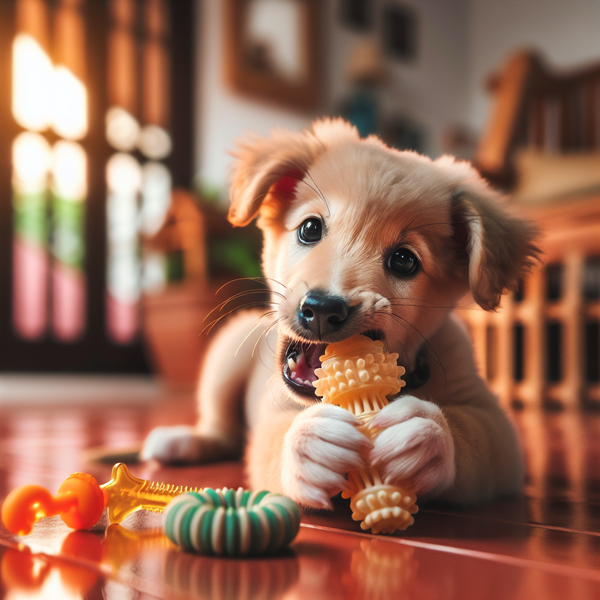
Stock up on appropriate chew toys. Have at least 5 to 8 different toys available — a mix of rubber toys, rope toys, and soft toys. Variety matters because your puppy's preferences will change.
Get small, soft training treats. You'll use these to reward good behavior. They should be tiny (pea-sized or smaller) and something your puppy genuinely loves. Commercial training treats, small pieces of cooked chicken, or bits of string cheese all work well.
Set up management tools. A baby gate, exercise pen, or puppy-proofed room gives you a way to separate yourself from your puppy briefly during training. This isn't punishment — it's a communication tool.
Prepare a frozen Kong or two. Stuff a Kong with peanut butter (xylitol-free), mashed banana, or soaked kibble, and freeze it overnight. You'll use these as high-value redirection tools.
Get everyone in the household on the same page. This plan only works if every person who interacts with the puppy follows the same approach. Sit down together, review the plan, and commit to consistency.
Day 1: Observe and Establish Your Baseline
Today's goal: Understand your puppy's biting patterns without trying to change them yet.
Today is about gathering information. Pay close attention to:
- When does your puppy bite most? Morning? Evening? After meals? After naps?
- What triggers the biting? Play? Excitement? You sitting on the floor? Walking past them?
- How hard does your puppy bite? Are they mouthing gently, or are they clamping down and leaving marks?
- What's their body language before and during biting? Wiggly and playful? Stiff and intense? Frantic and overtired?
Write down what you observe. Keep a simple log — even notes on your phone work fine. You're looking for patterns that will help you anticipate and prevent biting in the coming days.
Today's action step: Place a chew toy in every room where you spend time with your puppy. Get them within arm's reach so you're ready for tomorrow.
Day 2: Introduce the Bite Inhibition Response
Today's goal: Teach your puppy that hard biting ends the interaction.
Starting today, every time your puppy bites hard:
- Say "ouch" in a brief, high-pitched tone (think surprised, not angry).
- Immediately withdraw your attention — turn away, cross your arms, and avoid eye contact for 10 to 15 seconds.
- If the puppy continues to bite, calmly stand up and step behind a baby gate or leave the room for 15 to 30 seconds.
- Return and resume gentle interaction.
Important nuances:
- Only respond to hard bites today. You're targeting the highest-intensity bites first and working your way down over time.
- Keep your "ouch" brief and consistent. Don't yell, lecture, or repeat yourself.
- The withdrawal must be immediate. Even a 2-second delay reduces the effectiveness. Your puppy needs to connect their bite with the consequence in real time.
- When you return, keep your energy calm. Don't rush back in with excitement, which can trigger another biting episode.
Expect: Your puppy may be confused today. They might bite more at first as they try to figure out what's happening. This is called an "extinction burst" and it's actually a sign that the training is working — your puppy noticed the change.
Day 3: Add Active Redirection
Today's goal: Give your puppy something better to bite.
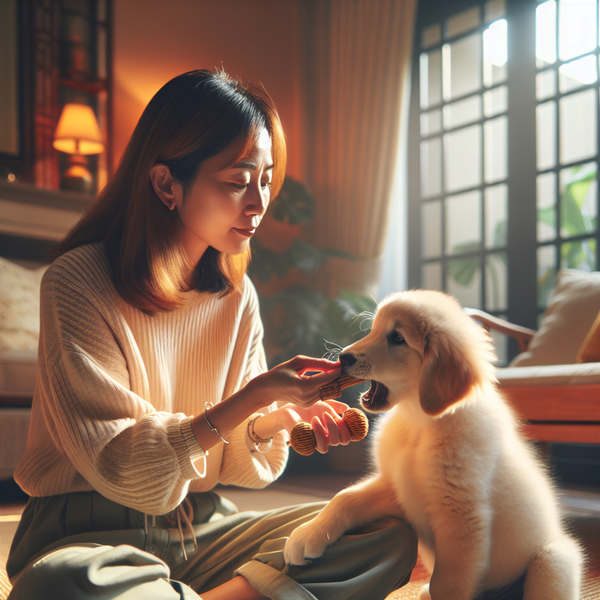
Continue the bite inhibition response from Day 2, and add this layer: every time your puppy approaches you with a mouthy look (you'll recognize it by now), proactively offer a toy before they bite you.
The technique:
- Keep a toy in your hand or lap during all puppy interactions.
- When your puppy comes toward your hands, present the toy and make it interesting — wiggle it, drag it on the floor, make it "alive."
- The moment your puppy grabs the toy, praise them enthusiastically: "Yes! Good toy!"
- If they bypass the toy and bite you anyway, use the Day 2 response (ouch, withdraw).
The key insight: You're teaching your puppy that toys are more fun than your skin. This works because you're making the toy exciting and making your hand boring. Many people accidentally do the opposite — they keep their hands moving and animated (exciting) while handing the puppy a motionless toy (boring).
Expect: Some successful redirections mixed with some bites. That's normal. You're building a new habit, and habits take repetition.
Day 4: Reward the Absence of Biting
Today's goal: Start actively rewarding your puppy for not biting.
This is where many puppy owners miss a huge opportunity. We get so focused on responding to biting that we forget to reinforce the behavior we actually want.
Today, start watching for moments when your puppy is doing something right:
- Chewing a toy near you? "Yes!" and treat.
- Sitting calmly while you pet them? "Good dog" and gentle praise.
- Sniffing your hand without biting? "Yes!" and treat.
- Licking your hand instead of biting? "Yes!" and treat.
- Lying down near you quietly? Gentle praise and treat.
Set a goal: Catch your puppy being good at least 10 times today. This feels like a lot, but once you start looking for it, you'll find plenty of opportunities.
Continue: The bite inhibition response (Day 2) and active redirection (Day 3). These are now permanent parts of your approach.
Expect: You may notice your puppy starting to offer you the behaviors you've been rewarding. They might bring a toy to you, or sit and look at you expectantly. Celebrate these moments — your puppy is figuring it out.
Day 5: Address Overtired Biting
Today's goal: Tackle one of the most common biting triggers — exhaustion.
If you've been observing your puppy's patterns (Day 1), you've likely noticed that biting intensifies when they're overtired. Today, you're going to proactively manage this.
The nap schedule:
Puppies aged 8 to 16 weeks need approximately 18 to 20 hours of sleep per day. That means for every hour they're awake, they should nap for about 2 hours. Most puppies don't self-regulate their sleep — you need to help them.
The protocol:
- After 60 to 90 minutes of wakefulness, your puppy probably needs a nap.
- Watch for signs of tiredness: biting intensifies, zoomies, inability to focus, crankiness.
- When you see these signs, calmly guide your puppy to their crate or pen.
- Give them a frozen Kong or a safe chew toy.
- Cover the crate partially to create a den-like environment.
- Walk away and let them settle. They may fuss briefly — that's okay.
The connection to biting: You'll likely see an immediate drop in biting episodes once you start managing nap times. Many puppy owners are shocked by how much of their puppy's biting is driven by exhaustion rather than by a behavioral problem.
Continue: Everything from Days 2 through 4, plus enforced nap times.
Day 6: Introduce a Default Behavior
Today's goal: Teach your puppy an alternative behavior that's incompatible with biting.
Today, you're going to teach your puppy "touch" — a behavior where your puppy boops your open palm with their nose. This is one of the most versatile behaviors you can teach, and it directly replaces biting your hand with touching your hand.
How to teach "touch":
- Hold your open palm about 6 inches from your puppy's nose.
- Most puppies will naturally investigate and bump your hand with their nose. The moment they do, say "yes!" and give a treat with your other hand.
- Repeat 5 to 10 times.
- Once your puppy is reliably bumping your hand, add the word "touch" just before you present your palm.
- Practice in short sessions (2 to 3 minutes) throughout the day.
How this helps with biting: Once your puppy understands "touch," you can use it as a redirection tool. When they come toward your hand with a mouthy intention, say "touch." They'll bump your palm with their nose instead of biting. Reward generously.
Continue: Everything from Days 2 through 5. You now have a comprehensive toolkit.
Day 7: Assess, Adjust, and Build Your Long-Term Plan
Today's goal: Review your progress and create a sustainable going-forward plan.
Take out the notes from Day 1 and compare them to what you're seeing now:
- Has the intensity of bites decreased? (Are they softer?)
- Has the frequency of bites decreased? (Are there fewer per hour?)
- Is your puppy redirecting to toys more easily?
- Are you seeing more moments of calm, gentle interaction?
If you're answering "yes" to even one of these, the plan is working. Remember, you're looking for progress, not perfection.
Common adjustments to make:
- If biting is decreasing during play but still bad when overtired: Focus more on enforced nap times. Your puppy may need more sleep than you're currently providing.
- If your puppy ignores toys and prefers your hands: Experiment with different toy types. Try toys that make noise, toys you can stuff with treats, or tug toys. Make yourself boring (freeze, turn away) and the toy exciting.
- If one family member is having more trouble than others: Check for consistency. Is that person roughhousing? Using different responses? Accidentally reinforcing the biting?
- If the biting seems to be getting worse: This can happen. Look for the extinction burst pattern — a temporary increase before a decrease. If biting is truly escalating after a full week of consistent effort, consult a professional trainer.
What to Expect After the 7 Days
The 7-day plan builds the foundation. Here's what the weeks and months after look like with continued consistency:
Weeks 2 to 4: Biting continues to decrease. You'll notice your puppy making better choices more often — going to a toy instead of your hand, settling down when they're tired, responding to redirection faster.
Months 2 to 3: Biting during calm interactions should be minimal. You may still see mouthy behavior during high excitement, but the intensity should be much lower.
Months 4 to 6: As adult teeth come in and teething resolves, biting decreases significantly. With the bite inhibition foundation you've built, your puppy's mouth control should be noticeably better than an untrained peer.
Common Mistakes That Undermine the Plan
Even with the best intentions, these errors can slow your progress:
Inconsistency between household members. If one person uses the bite inhibition response and another person lets the puppy chew on their hands, your puppy gets mixed signals. Everyone must be on the same page.
Responding emotionally. Yelling, shoving, or getting visibly frustrated can actually increase biting. Puppies find big reactions exciting or scary — neither helps. Stay calm, stay boring, stay consistent.
Skipping the management step. If your puppy can practice biting freely when you're not actively training, they're reinforcing the very behavior you're trying to reduce. Use baby gates, pens, and crate naps to prevent unsupervised biting practice.
Expecting linear progress. You'll have good days and bad days. Your puppy might be an angel on Day 4 and a land shark on Day 5. Zoom out and look at weekly trends, not daily snapshots.
Forgetting to reward the good stuff. This is the single most common mistake. We're hardwired to notice problems, which means we often overlook the quiet moments when our puppy is doing exactly what we want. Make a conscious effort to catch and reward good behavior.
Real Progress Takes Real Commitment
This 7-day plan gives you the framework. But the truth is, puppy biting doesn't fully resolve in a week. What does happen in a week is a shift — in your understanding, in your puppy's behavior, and in the dynamic between you.
You'll go from feeling helpless and frustrated to feeling equipped and confident. And your puppy will go from a tiny, confused biting machine to a puppy who is starting to understand the rules of the game.
That shift is everything. It's the foundation that everything else is built on.
Ready to go deeper? Our complete 7-Day Puppy Biting Solution course gives you the full program — including video demonstrations of every technique, printable daily checklists, troubleshooting guides for specific situations, and access to our private community where you can ask questions and share progress. All for just $19.
This is the same system that has helped over 2,000 puppy owners move from frustrated to confident in just one week.